ITALIAN AS A SECOND/THIRD LANGUAGE

Today, I am going to comment on a very interesting article I came across that discusses how children learn Italian as a second or third language.

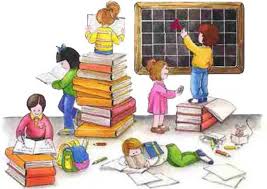
Allow me to elaborate further: here in Oslo, there is an Italian association where teachers and academic professionals teach Italian to children. These children either have Italian parents or are of half Italian and half Norwegian origin. It is fascinating to observe how these children learn a second or third language in addition to their native Norwegian.

While some of these children can accelerate their learning at home with the support of their Italian parents, others may need to put in a bit more effort due to their practice being limited to a classroom environment. However, regardless of their family background, it is said that children find it easier to learn a new language because they do not have as much information in their brains as adults. This means they are able to absorb and memorize new information more quickly.

Some of you may be wondering why I have selected this particular topic today. Well, it is because I have been hired by this Italian Association to work as a teacher for the 3rd, 4th, and 5th grades. Yippee!

What excites me the most about this role is the idea of becoming part of a system where I can witness these children’s progress while exploring new ways to support them throughout this journey. It will also be interesting to see how they use their imagination and creativity in a non-native language. I believe that people, particularly children, can learn faster while having a bit of fun. Therefore, I will be experimenting with game-like tasks to support their learning. In addition, I am planning to let them watch cartoons, read fairy tales to them, do some origami, etc. For the primary teachers out there, any other suggestions?

My first aim will be to understand how much Italian they know so far in order to determine the best class for them and the most effective way to teach them this beautiful language. This is a new and exciting challenge for me, as it is my first time teaching Italian as a second or third language to children. Currently, the lessons will be held online, but I am eager to teach in person soon, as I believe it is easier to learn a language face-to-face rather than through a computer.

Let’s see how it goes, wish me good luck!

And you, do you have any children who are learning a second or third language?

Feel free to share your insights and experiences.
Source

I miss being a tourist…

Greetings Everyone,

What a time we are living in! First and foremost, I hope that all of you are safe and well.

The topic of this article revolves around one of my greatest passions: traveling.

I truly and deeply love to travel! Believe me, I have had the opportunity to visit many different countries, and I would love to explore even more. The world is vast and filled with incredible sights… but who can possibly see it all?

But what type of tourism do I engage in? And what about others? What purpose does tourism serve?

I recently read an article about tourism that classified three different types of tourism: artistic tourism (museums, buildings, art galleries, religious temples, skyscrapers, monuments, etc.); event tourism (conferences, meetings, festivals, concerts, etc.); and nightlife tourism (parties, parties, parties…hehehe). To these, I would like to add “self-discovery tourism” or journeys that help one find themselves. Although, I believe that we do not need to seek external experiences to fulfill our souls, as fulfillment is already within us (a bit of philosophy here!). You can feel the same wherever you go unless you work on your inner self. Thus, travel is not always necessary.

Personally, I engage in a mix of the first three types of tourism. I think being a tourist is akin to being a student in a classroom: you learn and observe the daily life of a place; you taste wonderful foods; you experience things that may be unfamiliar in your own country, like different music or shows; and you learn about new cultures and their traditions. Traveling enriches your soul and makes you feel free to feel, think, see, do, and even buy. What a discovery, right? Haha. I know many of you share my thoughts on traveling, but I write this because I miss buying a flight ticket and dreaming about my next adventure. When I finally have the chance to travel again, believe me, I will savor every moment. After this stressful period and the constant fear for ourselves and our families, we all deserve to go back to where we belong or simply hug each other tightly until we find it hard to breathe! How amazing would that feel?

It is true that we appreciate or miss something much more once it is no longer available, rather than taking it for granted. This situation, caused by Covid-19, has forced us to change our habits and lifestyles: something as simple as a hug or a handshake may have held little importance before because it was taken for granted… but now? Now that we can no longer do these things, how does it feel? Bad, right?

For those who love tourism, I affirm that tourism is beneficial for everyone, not just for consumerism, which benefits society, but for enriching our knowledge, minds, and souls. You can meet people, compare your story to theirs, learn tips to improve your lifestyle or diet, visit new places, and so on. There is an infinite number of benefits we can gain from traveling. The most important thing is to appreciate our own country or home after visiting a place we may not have liked.

So, my friends, I truly hope that this lockdown will end soon and we can return to our routines, traveling once again to discover more of this wonderful world! I know it will take some time, but never lose hope!

What are your thoughts on this?

viaggiare
Source

Studying again!

Hello Everyone,

I would like to share my experience at the Norwegian university OsloMet (Oslo Metropolitan University):

This year, I embarked on a one-year program in Interpretation from Norwegian to Italian and vice versa. To elevate and improve my Norwegian proficiency, I believed that pursuing this course would be the most effective approach, as it involves a higher level of language study. Additionally, I recognized the need to advance beyond my current intermediate level in everyday Norwegian.

The program is part-time, allowing me to balance it with my job. We meet at the university once a month for weekend classes and group exercises. We also have weekly chats and a year to develop into proficient interpreters at category 3, which is the intermediate level. This qualification will enable us to work freelance for clients in specific sectors, such as the healthcare and legal systems.

Before starting the program, we were required to take an exam to assess our proficiency in both languages and our interpretation skills. I passed the exam with a category 5 rating, and now I am striving for category 3!

Throughout the course, I have encountered numerous specific words and techniques for becoming a good interpreter. My main concern is whether I will remember everything or most of it. I am determined to do my best, despite the challenge of studying a course in my fifth language.

Sometimes I feel exhausted because Norwegian is neither Spanish nor English, which I am more proficient in. However, I am committed to doing my best because I enjoy studying and learning new words. It is stimulating and trains my brain to work more efficiently and smartly.

I need to find strategies to memorize everything and use the techniques during interpretation exercises to enhance my skills. Interestingly, our interpretation exercises are recorded, allowing us to review and analyze our performance. This helps us identify areas for improvement and ensure we are professional in our work. In my first video, I noticed some mistakes, but it was a valuable learning experience that I can build on.

One aspect I did not particularly enjoy was the competitive nature of one of our chat classes. The teacher asked questions, and everyone typed answers as if it were a race to get the “correct answer” first. This stressed me out initially because it should have been a discussion, not a competition. However, subsequent chats were better, likely because they were managed by another teacher.

An interesting chat class is with our Italian tutor. We are just four people, and we discuss terminology lists in different contexts. We share our experiences and knowledge, making it a pleasant learning experience. My colleagues are wonderful people, and it is always fantastic to meet new people with diverse backgrounds. For instance, one of my colleagues is a Norwegian who lived in Florence for three years and studied languages and literature. He speaks excellent Italian with a charming Tuscan accent. Another colleague is an Italian interpreter who has been in the profession for ten years. She provides valuable insights into professional conduct and appropriate terminology. Lastly, we have an Italian policeman who needs to interpret Italian in his job, making this course beneficial for his professional role.

I feel fortunate and enthusiastic about this profession because I love learning from people with different backgrounds and experiences as well as from books. My curiosity drives me to dig deeper and learn more.

Let’s embark on this journey together!

Skjermbilde
Source

How do we learn a new language?

Hello Everyone,

In today’s globalized world, knowing a second language is essential, if not necessary. English, considered the most international and widely spoken language, tops the list. I also believe that Chinese and Spanish will soon join this category.

So, let’s start studying them too, shall we?

But how do we learn a new language effectively? Do you know any interesting tricks or tips to achieve proficiency in a short period?

Here’s what I did and continue to do to learn and improve the languages I speak:

I began with English. I studied it at school, but I made significant progress by translating English songs, especially those of my favorite singers. I watched MTV, CNN, and Fox News channels. Thanks to the exchange programs with the United States that my school participated in, I started corresponding with American students through letters. We also hosted some Australians, and I still maintain a friendship with one of them after 17 years.

I then studied Spanish and Portuguese at university. Spanish telenovelas and Portuguese series were immensely helpful. Moving to Spain was, of course, the best way to enhance my Spanish until I acquired the local accent of the city I lived in. Working as a receptionist there allowed me to practice and improve both languages daily through interactions with customers.

Finally, I moved to Norway, where I had to learn Norwegian to integrate better into society. Here, I met two wonderful Brazilian friends who help me practice and improve my Portuguese. Currently, I work as a hotel receptionist, which gives me the opportunity to speak all these languages daily. It’s both challenging and enjoyable!

So, what tips or tricks can I recommend to you for learning a language quickly and effectively?

Study Grammar: Read a grammar book, do exercises, and focus on the rules.

Watch Foreign Channels: Engage with content on international news channels, movies, and TV shows.

Read: Dive into articles, books, and any written content in the target language.

Listen to Music: Songs can help with listening skills and pronunciation.

Even with a busy life, dedicating just half an hour per day can make a significant difference. For speaking practice, look for international exchange programs in your city. These programs often involve language exchange over coffee, where you can practice speaking with a native speaker of your target language. Making international friends can also be incredibly helpful.

Use the new words you learn as often as possible to avoid forgetting them. Importantly, take the risk to speak, even if you make mistakes. This trial and error process is essential because the person you are conversing with will likely correct you, helping you remember and learn.

The most effective tip is to travel to the country where the language is spoken. Immersing yourself in the language 24/7 accelerates learning. If possible, move there for a few months. This method is both challenging and fun!

Good luck!

pic2

Source

They came back home!

Hello Everyone,

Words travel all around the world, and after so many decades, they come back home. As I continue reading “L’Italiano e’ bello” by Mariangela Galatea Vaglio, I came across some fascinating insights that I would like to share with you. It turns out that many words we think are of Anglo-Saxon origin are actually Latin. So, even when we believe we are borrowing these words from another language, we are, in fact, using them correctly because they originate from Latin, our mother tongue!

For example:

Sport: While it is commonly associated with English, its origin is Latin (sportula). Sportula was a small basket used by housewives to buy food. In ancient Rome, during sports competitions, winners received a crown and a sportula, which was useful and significant for everyday life.

Computer: This word also derives from Latin (computo, meaning calculation). Interestingly, the first personal computer was Italian, created by Olivetti. It was called Perottina, named after its inventor, Perotto. It was even used in NASA operations that sent humans to the moon. Curious, isn’t it? A small yet significant step for mankind made by Italians… just saying… 😊

Jeans: The term “blue jeans” comes from “blu di Genoa, Genova” (the cloth used by dockworkers for their uniforms due to its durability). Similarly, jeans became the uniform for American workers.

To sum up

these words and many others have Latin roots (Latin is considered a dead language today, except for its use in writing Catholic books by the church). They were exported abroad and became part of the English language, causing confusion by making people believe they had a completely different origin.

Incredible, right? This is just another example of how a language evolves!

words
Source