We don’t speak Italian!

The Evolution of Modern Italian: An International Influence

It is evident that the Italian we speak today has become quite international, primarily due to our habit of incorporating numerous foreign words into our daily conversations. As a result, it often doesn’t sound like a purely national language anymore. We adopt many loanwords from different cultures, not only because they are concise and help us communicate more quickly, but also because they make us appear “cool.” By “cool,” I mean sophisticated in our linguistic abilities, and our globalized society requires us to demonstrate our open-mindedness.

We frequently mix different languages into our own, such as:

Italian: Ci sentiamo questo weekend? Così ti mando il link del file che mi hai chiesto.

Translation: Shall we call each other this weekend? So I can send you the link of the file you asked me.

Italian: Ho bisogno di una babysitter.

Translation: I need a babysitter.

Italian: Dobbiamo trovare una bella location questo weekend per fare delle foto.

Translation: We have to find a nice location this weekend to take some pictures.

In these examples, approximately 30-50% of the sentences are in English, even though we are speaking Italian. The amusing part is that each of these words has a proper Italian translation, which we rarely use:

Weekend: fine settimana

Link: collegamento

File: cartella

Babysitter: tata

Location: posto, luogo

As you can see, we have numerous opportunities to elevate our language by using these Italian terms in our everyday speech. However, we often prefer the foreign words, possibly because we have become somewhat Americanized!

We might consider following the example of Spanish speakers, who translate almost everything from English to Spanish. They do this out of nationalism and a strong desire to preserve and promote their national language.

What are your thoughts on this? Do you mix different languages in your speech as well?

english-phrases-1
Source

Let’s have a coffee?

The Unique Ritual of Coffee in Italy and Around the World

Whoever visits or has visited Italy often finds the simple task of having a coffee to be a unique and amusing experience. Have you ever wondered why? In Italy, people typically go to a bar, order a coffee, drink it while having a brief conversation with the barista about their day or other topics, and leave! The entire process lasts two minutes or less.

In contrast, in many other countries around the world, having a coffee often serves as an excuse to relax and spend about an hour catching up with friends, updating each other on life events, laughing, chatting, or simply enjoying time together.

In Norway, I have noticed that most people opt for take-away coffee. This is primarily because they are often in a hurry and, during the winter, need to warm their hands due to the cold temperatures.

Another interesting observation is the size of coffee cups: in Italy, they are quite small, whereas in Norway, they are much larger. Waiters even ask if you want a single or double coffee! This difference might be because the coffee in Norway is not as strong as it is in Italy.

Did you know that in the 18th century, coffee bars became popular meeting points for writers in Italy? They would gather there to discuss poems, exchange ideas, and more. Drinking coffee helped them stay awake and provided the energy needed for writing. These morning rituals that Italian people partake in today have their roots in this historical period.

Why is it that in Italy, such activities go by so quickly while in other parts of the world, the pace seems much slower? It’s a curious difference in cultural practices, isn’t it?

cafe espresso
Source

Espresso coffee

LADIES-HAVING-COFFEE
Source

Social coffee

take away coffee
Source

Take-away coffee

Do you drink coffee and for what?

The world of the dictionary

Today, with the advent of the Internet, the use of traditional dictionaries has diminished. The new generation may not even know how the pages of a dictionary smell or how enjoyable it can be to search for words manually!

A dictionary provides comprehensive explanations about words, and as I continue reading “L’italiano è bello” (Italian is Nice) by Mariangela Galatea Vaglio, I have discovered intriguing information about the origins of the very first Italian dictionary and the first academy that validates every new word to be accepted as part of the Italian language.

At the end of the 16th century, Italians spoke a vernacular language. Following Dante’s works in the 14th century, which were written in a more elegant Florentine Italian than the vernacular, writers thought to establish a grammar for the Florentine language. They believed that having rules would simplify writing and speaking for themselves and future writers.

In 1583, The Accademia della Crusca was founded. If translated into English, it would be The Bran Academy, metaphorically representing the language ground in all its words, which are like cereals. Initially, it was a club where writers gathered to discuss literature and linguistic issues. Today, it serves as the national and official academy where new Italian words are incorporated into the language.

In 1612, the first Italian dictionary was published. All words were listed in alphabetical order, and each word included several examples based on different contexts.

All of Europe began to follow the Italian example. This undoubtedly helped the writers of that time and continues to aid modern writers.

I emphasize the importance of keeping dictionaries alive and actually using them, as their main purpose is to educate, inform, and enrich our intelligence.

The book I’m reading is fascinating, and I will certainly share more insights from it in future articles. There is always something new to learn!

Do you use your native language dictionary?

Source

What am I?

Are You Curious? Do You Want to Train Your Brain?

What do you think about riddles? A riddle is an excellent exercise for our brains. It is quite useful for enhancing our intelligence, attention, and speed in understanding what the riddle is talking about.

As the Cambridge Dictionary explains, a riddle is a type of question that describes something in a difficult and confusing way and has a clever or funny answer, often asked as a game; something that is confusing or a problem that is difficult to solve. Please check: Cambridge Dictionary – Riddle

Here are some riddles in the five languages I speak. Let’s see who can guess them:

Italiano- Riddle: La mia vita può durare qualche ora, quello che produco mi divora. Sottile sono veloce, grossa sono lenta e il vento molto mi spaventa. Chi sono?

Español- Riddle: Lleva años en el mar y aún no sabe nadar.

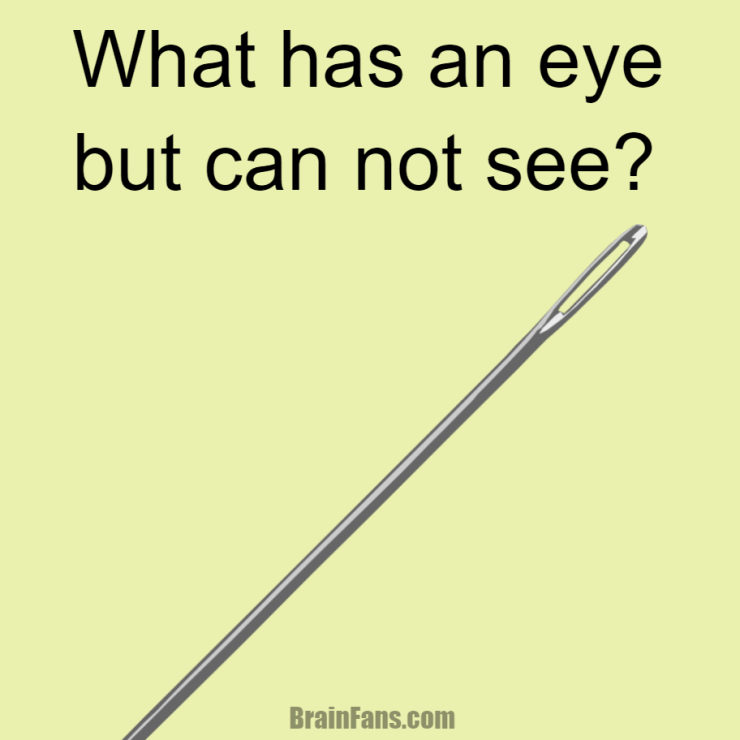
English- Riddle: What can travel around the world while staying in a corner?

Português- Riddle: Somos muitos irmãozinhos em uma só casa vivemos, se nos coçam a cabeça, num instante morremos.

Norsk- Riddle: Hvem er det som er sønn av mine foreldre, men likevel ikke min bror?

Isn’t this cool? Let’s try to guess them!

Please write the answers if you know them!

brain-teaser-logic-riddles-what-has-an-eye-but-cannot-see-1658557895593452f40de0b1.80044688
Source

Answers: Italiano- La candela; Español- La arena; English- The stamp; Portugués- Os fósforos; Norsk- Meg selv.

Who is right?

The Origin of Pizza: An Intriguing Exploration

I am so shocked! I am reading a very interesting book titled “L’italiano è bello” (Italian is Nice) by Mariangela Galatea Vaglio. Throughout the book, which explains a lot about Italian history, culture, and of course language, I came across this passage:

La pizza, per esempio, molto probabilmente è un lascito dei Longobardi. L’etimologia è incerta e anche i linguisti non si sentono sicuri, ma potrebbe aver avuto origine da bizzo/a, pezzo di pane, morso (tedesco bissen). La parola, che indicava allora una focaccia bianca, si diffonde a partire dai domini longobardi del Sud, anche se è solo nell’Ottocento, con l’invenzione della pizza margherita, così chiamata per omaggiare la regina Margherita di Savoia consorte di Umberto I, che la pizza diverrà famosa e mangiata in tutto il mondo. Non si può escludere insomma che nel gran caos del Medioevo dei barbari tedeschi abbiano inventato il più mediterraneo dei nostri piatti.

Translation (as I didn’t find the original English one, I propose mine):

“For example, it is very probable that pizza is a bequest from the Lombards. The etymology is uncertain, and even linguists are unsure about it, but it could have originated from bizzo/a, meaning a piece of bread or bite (German: bissen). The word, which initially referred to a white focaccia, spread from the Lombardic domains in the South. However, it was only in the 19th century, with the invention of the pizza margherita, named in honor of Queen Margherita of Savoy, the wife of Umberto I, that pizza became famous and eaten worldwide. In short, we cannot exclude the possibility that in the chaos of the Middle Ages, the Germanic barbarians invented the most Mediterranean of our dishes.”

I would like to highlight the phrases “it is very probable” and “the linguists are unsure about it” to emphasize that there is uncertainty regarding this claim. I mean, I hope it is not true! But I tried to search for the real origin of pizza, and here’s what I found:

On the Wonderopolis page, they discuss the ancient Greeks and Romans and mention an Italian man from Naples who baked the first pizza. Please check: Wonderopolis – Who Invented Pizza

On the Pizzafacts page, they talk about several early users of pizza around the 1st century BC. They also mention 3000-year-old flattened breads in Sicily and the Roman Empire, especially in the areas of Naples and Pompeii, where they baked white focaccia. However, no specific inventors are named. Please check: Pizzafacts – History of Pizza

The page on independent.co.uk discusses the origins of pizza from Lazio in 997 AD, where 12 pizzas were baked for Christmas Eve. Please check: Independent – Pizza Origins

And there are many more links that more or less say the same.

So, who is right? Which source is true? What I think is that Italians appropriated the origins of pizza at the right moment, and this amazing dish spread worldwide. Was that simply luck? What do you think? Or, from the very early years of the Roman Empire, could we have invented such flatbread, even though we know that in Spain (Valencia, Balearic Isles) they have Coca or in Greece, Pita, and so on? And if Mariangela is right, is pizza Lombardic?

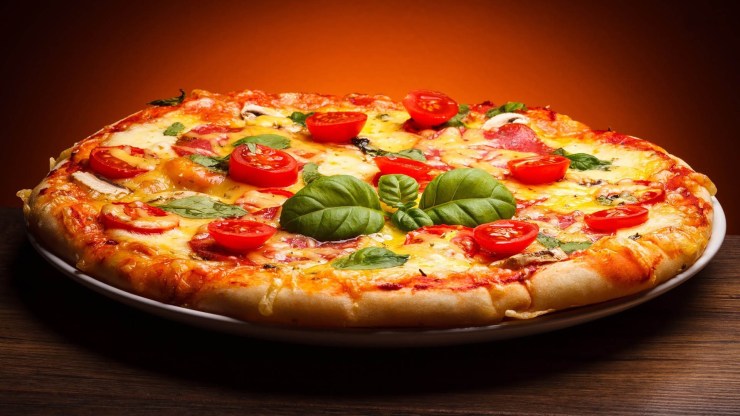
pizza3
Source