Different sounds!

Hello Everybody,

Have you ever considered how wonderful the sound of a language is? And, at the same time, how different and sometimes amusing a non-native speaker sounds, especially when their pronunciation reflects their native language?

In my personal experience, even though I strive to speak the languages I know very well and try to hide my native accent, my Italian intonation still comes through! It is quite amusing, especially when I speak Spanish. To tell you the truth, I often get asked, “Where are you from?” by people. At this point, I think it would be helpful to share a bit of my background so you can understand the different language influences I’ve absorbed over the years.

I lived in Seville for six years and one year in Palma de Mallorca, where I met many Caribbean people. As a result, my accent is a unique blend of Andalusian and Cuban! Curious, isn’t it? Many Spanish speakers ask if I am from the Canary Islands because there is a significant population of Cubans there who mix Castellano with Cuban expressions. I must admit, I am like a sponge, absorbing the sounds I hear around me.

The same happens with Portuguese speakers who ask me if I am Brazilian because I learned Brazilian Portuguese. Thanks to my several Brazilian friends who help me practice, I sound quite Brazilian, or so they say!

But now let’s talk about those who use their native accents to speak another language. Spanish speakers, particularly those from mainland Spain, caught my attention. They speak English with their native sounds, which can sound quite unusual. For example, English words beginning with “s” are pronounced with an “es” sound, as in Spanish. It is challenging for them to drop the “e“:

Study – estudy (Spanish pronunciation)

School – eschool

Spain – Espain

The word Google is often pronounced “Googel,” and the letter “h” is pronounced like the Spanish “j” with its guttural sound, so “hip-hop” becomes “ji-jo.” This can be confusing for native English speakers, who may struggle to understand due to these pronunciation differences.

It is not entirely their fault, as Spain extensively dubs TV programs and films, making it harder to learn proper English. Additionally, they are quite nationalistic, translating almost everything from English to Spanish.

Conversely, Italians often mix English and Italian, sounding Americanized, but they also face challenges due to extensive dubbing.

I have heard Portuguese speakers speak English well, despite their nasal sounds. Norwegians, including myself, tend to sing when speaking English, influenced by their native intonation. I have been told my English carries a mix of Italian, Spanish, and Norwegian accents by my American friends, hehehe!

What about American or English speakers speaking Spanish or Italian? Forgive me, but it sounds amusing (in a good way, of course)!

First, their “r” sound and, particularly among Americans, their “t” sound often comes out as “d“:

Ristretto – ristredou (American pronunciation)

Salita – salida

Vecchietta – vechieda

Lastly, Germans (even though I do not know German, their accent when speaking Italian caught my attention) speak Italian with a very pronounced accent, substituting “ge” with “ce“:

Germania – Cermania (German pronunciation)

Gente – cente

How funny do we all sound? And how beautiful is every language, with all its pros and cons?

pic1
Source

Our everyday chats…

Hello Dear Readers,

I would like to start today’s article with a simple question: Is it just me who thinks that our smartphones rule our daily lives? When you think about it carefully, we don’t even need to use a computer anymore. With smartphones and their applications, as well as the most popular social media platforms, we can accomplish so much instantly. We can chat with friends all over the world, and because we live in a time where we want to do many things simultaneously and quickly, we often shorten words to save time.

I’d like to share some examples in the five languages I know to illustrate how amusing, yet at times stressful and sad, it can be for language enthusiasts to see grammar being neglected. But well! Win some, lose some…

For example, the proper word for “message” is abbreviated as “msg.” So, “Can I send u a msg?” should be “Can I send you a message?

Italian:

Text: Ciao! Cm stai? T posso kiam dopo? C ved fra 2 gg. Tvttb.

Full Sentence: Ciao! Come stai? Ti posso chiamare dopo? Ci vediamo fra due giorni. Ti voglio tanto tanto bene.

(Hi! How are you? Can I call you later? See you in two days. I love you so so much.)

Text: Xo Xké fai cs?

Full Sentence: Però perché fai così?

(But why do you act like this?)

Spanish:

Text: Wenas! bno ntp! ns vms dsps!

Full Sentence: Buenas tardes! Bueno no te preocupes! Nos vemos después!

(Good afternoon! Well, don’t worry! See you later!)

Text: Tkm, pr q sepas! xoxo

Full Sentence: Te quiero mucho, para que sepas! Besos y abrazos.

(I love you so much, just to let you know! Hugs and kisses)

English:

Text: Hi! How r u? TGIF!!! LOL

Full Sentence: Hi! How are you? Thank God it’s Friday!!! Laughing out loud

Text: TYVM 4 ur help! ILU!

Full Sentence: Thank you very much for your help! I love you!

Portuguese:

Text: Pdc, acho q vc está certo!

Full Sentence: Pode crer, acho que você está certo!

(You can believe it, I think you are right!)

Text: Te digo a vdd: tenho sdds d vc!!!

Full Sentence: Te digo a verdade: tenho saudades de você!!!

(I tell you the truth: I miss you!!!)

Norwegian:

Text: Ifht hva du sier, r d ikke mulig å gjøre d pga stedet.

Full Sentence: i forhold til hva du sier, er det ikke mulig å gjøre det på grunn av stedet.

(According to what you say, it is not possible to do that because of the place.)

Text: R de 3 elns? Også hvor r de?

Full Sentence: Er de tre eller noe sånt? Også hvor er de?

(Are they three or something like that? And also, where are they?)

As you can see, with this method, we create new vocabulary every day. However, it may not be quite understandable for everyone. Sometimes, I think it is better to value a single moment and take a minute to write a complete message.

Isn’t it better to read “I LOVE YOU” instead of “I LUV U”? Think about it!

bulle-dialogue-papier-messages-courts_7547-333 (1)

Source

What time is it?

The Significance of Time in Our Daily Lives

Time” is a small word with immense importance in our everyday lives. Everything revolves around it: every moment and every minute we take is a step toward organizing our daily activities. We often live as if our time is running out, which is somewhat accurate, but sometimes we should slow down and enjoy every moment fully.

We tend to plan our days with some sort of agenda, organizing our routines and scheduling specific appointments or errands. But how do we ask “What time is it?” and respond to this question in Italian, Spanish, English, Portuguese, and Norwegian?

The inspiration for this article came from an experience I had recently. I overheard a Norwegian person abbreviate the proper way of stating the time, and I wondered, “Is that possible?” After considering how he should have said it, I understood why he omitted the full phrase—it takes quite a long time to say it in Norwegian! Before we delve into the Norwegian way of telling time, let’s examine how it is done in other languages.

Italian: In Italian, we ask, “Che ore sono?” (we use the plural form to inquire about the time of day). The response is, “Sono le undici” (it is eleven o’ clock) or “È l’una” (it is one o’ clock). We use the singular form for the number one and the plural form for other numbers. The time can be stated in both digital and analog formats. In this article, I will focus on the analog format because it involves more words in the sentence: “Sono le undici e venti!” (it is twenty past eleven) or “Sono le tre meno un quarto!” (it is a quarter to three). “E” is “past“/right side of the clock and “meno” is “to“/left side of the clock.

Spanish: In Spanish, the question is, “¿Qué hora es?” or “¿Qué horas son?“—both singular and plural forms are used. The answer is always in the plural form, except for one o’clock, which is singular, just like in Italian. “Son las quince y veinticinco” (it is twenty-five past three PM) or “Son las cuatro menos cinco” (it is five to four). On the right side of the clock, they use “y” (and), and on the left side, they use “menos” (to).

English: In English, we ask, “What time is it?” and respond with, “It is twelve o’ clock” or “It is ten to ten!” The singular form is used here. When telling time in English, remember that “past” is used for the right side of the clock (e.g., “it is a quarter past three“), while “to” is used for the left side (e.g., “it is twenty to four“).

Portuguese: Portuguese follows the same pattern as Spanish. They ask, “Que hora é?” or “Que horas são?” and answer with, “São as cinco para onze” or “É a uma e cinco“. “Para” is used to mean “to” (left side of the clock), and “e” is used for “past” (right side of the clock).

Norwegian: Finally, let’s analyze the Norwegian way, which led me to write this article. They ask, “Hva er klokken?” The answer can be complex. For the first quarter on the right side of the clock, they say, “Det er fem tjue” (it is five twenty). For the last quarter, they say, “Det er kvart på fire” (it is a quarter to four). The challenge, particularly for immigrants, comes with phrases like “Det er ti/fem på halv ett” which translates literally to “It is ten/five minutes to the half-hour to one” (meaning “it’s twelve twenty/twenty-five”). For the left side of the clock, they say, “Det er fem/ti over halv tre”, meaning “it is five/ten minutes past the half-hour to three” (i.e., “twenty/twenty-five minutes to three“).

Considering this explanation, I recall the phrase I heard: “Er det ti over?” (He asked, “Is it twenty to…?“)—a significant abbreviation! He should have said, “Er klokken ti over halv elleve?” (Is it twenty to eleven?).

I often wonder why people complicate their lives. What is complicated and “strange” for some might be simple and easy for others. It just takes time to memorize how certain things work.

And I appreciate that!

cartoon_face_large_clock-r32cf18472ea843f69edc3b3bbc8e267f_fup13_8byvr_307

Source

What am I?

Are You Curious? Do You Want to Train Your Brain?

What do you think about riddles? A riddle is an excellent exercise for our brains. It is quite useful for enhancing our intelligence, attention, and speed in understanding what the riddle is talking about.

As the Cambridge Dictionary explains, a riddle is a type of question that describes something in a difficult and confusing way and has a clever or funny answer, often asked as a game; something that is confusing or a problem that is difficult to solve. Please check: Cambridge Dictionary – Riddle

Here are some riddles in the five languages I speak. Let’s see who can guess them:

Italiano- Riddle: La mia vita può durare qualche ora, quello che produco mi divora. Sottile sono veloce, grossa sono lenta e il vento molto mi spaventa. Chi sono?

Español- Riddle: Lleva años en el mar y aún no sabe nadar.

English- Riddle: What can travel around the world while staying in a corner?

Português- Riddle: Somos muitos irmãozinhos em uma só casa vivemos, se nos coçam a cabeça, num instante morremos.

Norsk- Riddle: Hvem er det som er sønn av mine foreldre, men likevel ikke min bror?

Isn’t this cool? Let’s try to guess them!

Please write the answers if you know them!

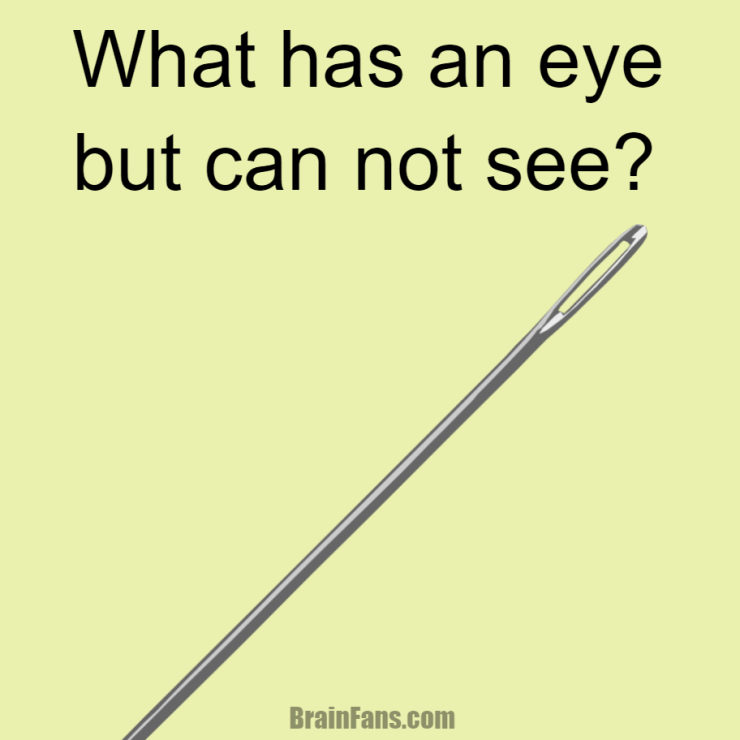
brain-teaser-logic-riddles-what-has-an-eye-but-cannot-see-1658557895593452f40de0b1.80044688
Source

Answers: Italiano- La candela; Español- La arena; English- The stamp; Portugués- Os fósforos; Norsk- Meg selv.

Homonyms…

Have you ever found yourself confused by a word that has multiple meanings depending on the context, especially when you didn’t know which meaning applied? I certainly have. Today, let’s delve into the intriguing world of homonyms: words that have the same spelling and pronunciation but different meanings.

Let’s begin with a Spanish homonym that caught my attention: MONO

According to the Spanish Dictionary RAE (Real Academia Española), “mono” means:

A nice person;

A nice thing;

Monkey;

Overalls; and many more… Please check RAE – Mono

I chose this word because, the other day, I was chatting with a Spanish friend who used “mono” in almost every other sentence. It intrigued me because I wondered how a single word could have so many different meanings.

Similarly, consider the English word COOL

According to the Cambridge Dictionary, “cool” means:

Cold, referring to temperature;

Good, as in agreeing with something;

Calm or weaker;

Fashionable or attractive; and many more. Please check Cambridge Dictionary – Cool

My curiosity extended to Portuguese and Norwegian homonyms as well:

Portuguese:

SALTO:

High heels;

To leap.

BANCO:

Bank;

Bench.

Please check both links: Dicio – Salto; Dicio – Banco

Norwegian:

VÅR:

Our;

Spring.

MÅL:

Goal;

To measure;

Language.

Please check both links: Ordbok – Vår; Ordbok – Mål

I applied this approach to my own language, Italian. Although I don’t speak Italian as frequently, with some research, I found words like:

CAPITALE:

A sum of money;

A city.

FINE:

Aim;

End.

Please check Treccani – Capitale and Treccani – Fine

But how can we avoid confusion? Is practicing and training 24/7 for 365 days a year enough? For me, juggling five languages—well, it might seem like Mission Impossible or Possible! We shall see.

Does this happen to you too?

words
Source