What am I?

Are You Curious? Do You Want to Train Your Brain?

What do you think about riddles? A riddle is an excellent exercise for our brains. It is quite useful for enhancing our intelligence, attention, and speed in understanding what the riddle is talking about.

As the Cambridge Dictionary explains, a riddle is a type of question that describes something in a difficult and confusing way and has a clever or funny answer, often asked as a game; something that is confusing or a problem that is difficult to solve. Please check: Cambridge Dictionary – Riddle

Here are some riddles in the five languages I speak. Let’s see who can guess them:

Italiano- Riddle: La mia vita può durare qualche ora, quello che produco mi divora. Sottile sono veloce, grossa sono lenta e il vento molto mi spaventa. Chi sono?

Español- Riddle: Lleva años en el mar y aún no sabe nadar.

English- Riddle: What can travel around the world while staying in a corner?

Português- Riddle: Somos muitos irmãozinhos em uma só casa vivemos, se nos coçam a cabeça, num instante morremos.

Norsk- Riddle: Hvem er det som er sønn av mine foreldre, men likevel ikke min bror?

Isn’t this cool? Let’s try to guess them!

Please write the answers if you know them!
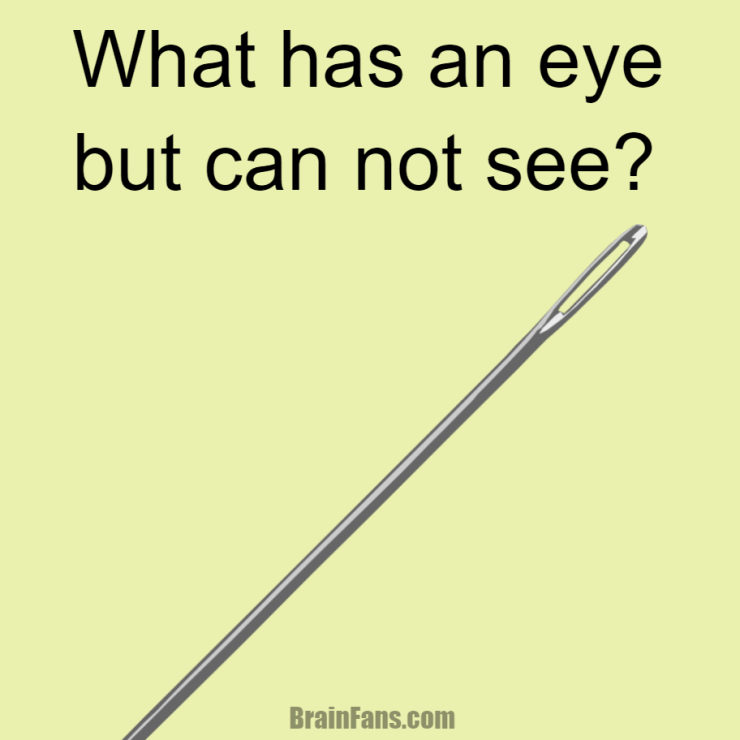
brain-teaser-logic-riddles-what-has-an-eye-but-cannot-see-1658557895593452f40de0b1.80044688
Source

Answers: Italiano- La candela; Español- La arena; English- The stamp; Portugués- Os fósforos; Norsk- Meg selv.
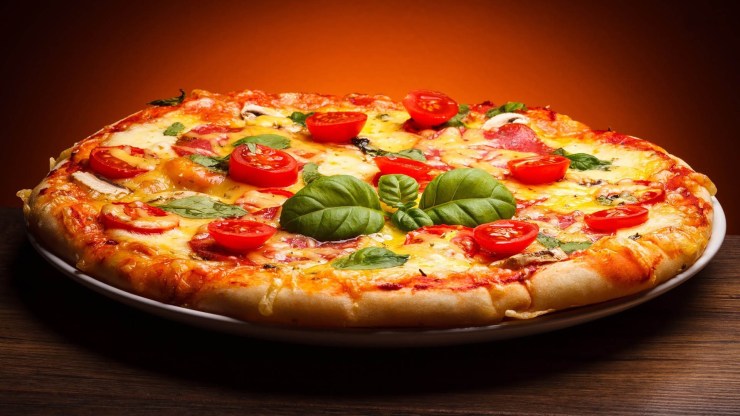
Who is right?

The Origin of Pizza: An Intriguing Exploration

I am so shocked! I am reading a very interesting book titled “L’italiano è bello” (Italian is Nice) by Mariangela Galatea Vaglio. Throughout the book, which explains a lot about Italian history, culture, and of course language, I came across this passage:

La pizza, per esempio, molto probabilmente è un lascito dei Longobardi. L’etimologia è incerta e anche i linguisti non si sentono sicuri, ma potrebbe aver avuto origine da bizzo/a, pezzo di pane, morso (tedesco bissen). La parola, che indicava allora una focaccia bianca, si diffonde a partire dai domini longobardi del Sud, anche se è solo nell’Ottocento, con l’invenzione della pizza margherita, così chiamata per omaggiare la regina Margherita di Savoia consorte di Umberto I, che la pizza diverrà famosa e mangiata in tutto il mondo. Non si può escludere insomma che nel gran caos del Medioevo dei barbari tedeschi abbiano inventato il più mediterraneo dei nostri piatti.

Translation (as I didn’t find the original English one, I propose mine):

“For example, it is very probable that pizza is a bequest from the Lombards. The etymology is uncertain, and even linguists are unsure about it, but it could have originated from bizzo/a, meaning a piece of bread or bite (German: bissen). The word, which initially referred to a white focaccia, spread from the Lombardic domains in the South. However, it was only in the 19th century, with the invention of the pizza margherita, named in honor of Queen Margherita of Savoy, the wife of Umberto I, that pizza became famous and eaten worldwide. In short, we cannot exclude the possibility that in the chaos of the Middle Ages, the Germanic barbarians invented the most Mediterranean of our dishes.”

I would like to highlight the phrases “it is very probable” and “the linguists are unsure about it” to emphasize that there is uncertainty regarding this claim. I mean, I hope it is not true! But I tried to search for the real origin of pizza, and here’s what I found:

On the Wonderopolis page, they discuss the ancient Greeks and Romans and mention an Italian man from Naples who baked the first pizza. Please check: Wonderopolis – Who Invented Pizza

On the Pizzafacts page, they talk about several early users of pizza around the 1st century BC. They also mention 3000-year-old flattened breads in Sicily and the Roman Empire, especially in the areas of Naples and Pompeii, where they baked white focaccia. However, no specific inventors are named. Please check: Pizzafacts – History of Pizza

The page on independent.co.uk discusses the origins of pizza from Lazio in 997 AD, where 12 pizzas were baked for Christmas Eve. Please check: Independent – Pizza Origins

And there are many more links that more or less say the same.

So, who is right? Which source is true? What I think is that Italians appropriated the origins of pizza at the right moment, and this amazing dish spread worldwide. Was that simply luck? What do you think? Or, from the very early years of the Roman Empire, could we have invented such flatbread, even though we know that in Spain (Valencia, Balearic Isles) they have Coca or in Greece, Pita, and so on? And if Mariangela is right, is pizza Lombardic?

pizza3
Source

Homonyms…

Have you ever found yourself confused by a word that has multiple meanings depending on the context, especially when you didn’t know which meaning applied? I certainly have. Today, let’s delve into the intriguing world of homonyms: words that have the same spelling and pronunciation but different meanings.

Let’s begin with a Spanish homonym that caught my attention: MONO

According to the Spanish Dictionary RAE (Real Academia Española), “mono” means:

A nice person;

A nice thing;

Monkey;

Overalls; and many more… Please check RAE – Mono

I chose this word because, the other day, I was chatting with a Spanish friend who used “mono” in almost every other sentence. It intrigued me because I wondered how a single word could have so many different meanings.

Similarly, consider the English word COOL

According to the Cambridge Dictionary, “cool” means:

Cold, referring to temperature;

Good, as in agreeing with something;

Calm or weaker;

Fashionable or attractive; and many more. Please check Cambridge Dictionary – Cool

My curiosity extended to Portuguese and Norwegian homonyms as well:

Portuguese:

SALTO:

High heels;

To leap.

BANCO:

Bank;

Bench.

Please check both links: Dicio – Salto; Dicio – Banco

Norwegian:

VÅR:

Our;

Spring.

MÅL:

Goal;

To measure;

Language.

Please check both links: Ordbok – Vår; Ordbok – Mål

I applied this approach to my own language, Italian. Although I don’t speak Italian as frequently, with some research, I found words like:

CAPITALE:

A sum of money;

A city.

FINE:

Aim;

End.

Please check Treccani – Capitale and Treccani – Fine

But how can we avoid confusion? Is practicing and training 24/7 for 365 days a year enough? For me, juggling five languages—well, it might seem like Mission Impossible or Possible! We shall see.

Does this happen to you too?

words
Source

What do they say/do?

When we Italians listen to someone who is explaining something we don’t understand, we say: “They are speaking Arabic!”; Spanish say: “They are speaking Chinese!”; Brazilians, Norwegians and English say: “They are speaking Greek!/This is Greek to me!”. It is curious right? Each of these three languages is complicated grammatically and culturally, they are three different worlds. Continue reading “What do they say/do?”

Norwegian style!

5 years in this beautiful country, 5 years living in a completely different culture, trying to integrate myself to this society… Norway or No way?

I read a very interesting book in May which title is The social guidebook to Norway by Julien S. Bourrelle: the funniest thing is that I was told to read it by a Brazilian friend of mine who lives in Germany, but as she has been in Norway for holidays, she bought it and since she knows I live here, she suggested for me to read it. To be honest it was the first time me hearing of such a book, even though I have been living in Norway for so long now, but anyway, I visited her and I read this book in half an hour!

Continue reading “Norwegian style!”