CORONA NEW VOCABULARY

Good morning, everyone, and happy New Year once again!

As we find ourselves still in the midst of this ongoing lockdown season, it feels as though time has stood still. I understand that it’s a challenging time for us all, but let’s continue to remain strong and hold onto hope.

While we may not be able to return to our normal routines just yet, perhaps we can view this period as an opportunity to truly appreciate life and its simple joys. What do you think?

Today, I want to explore how the meaning of certain words has shifted during this time. Have you noticed it too? Words that once held positive connotations now carry a different weight in light of the pandemic.

For instance, we used to praise positivity, but now being around a “positive” person can be risky due to the potential for infection. Even something as fundamental as human touch has taken on a different meaning, as we navigate the necessity of social distancing.

Words like “quarantine,” “restrictions,” “closed,” “ambulance,” “hospital,” “vaccine,” “infected,” and “dead” have become a part of our daily vocabulary, evoking feelings of stress, depression, and anxiety.

However, amidst these challenging times, there are words that continue to offer hope and strength. While they may be familiar, let’s not overlook their significance:

“Home,” “family,” “Earth,” “savings,” “love,” “hugs,” “health,” and many more. Let’s hold onto these words, as they can serve as sources of motivation in our daily lives.

Perhaps the most important word right now is “patience.” We must remain patient as we wait for better days ahead and approach this situation with a positive mindset. Additionally, let’s not forget the importance of gratitude. Despite the difficulties, we can be grateful for what we have, including the ability to connect with loved ones through social media.

My heart goes out to those who have lost loved ones or livelihoods due to this virus. Know that you are not alone, and I stand with you during these challenging times. Personally, I am grateful for my health, my family, and the everyday comforts that I have.

Let’s continue to hold onto hope and strive for a better future.

Good luck to each and every one of you!
Source

Latin still lives!

Hello Everyone,

As time progresses, everything around us evolves, and our language is no exception. In our daily routine, we use English words, and our vocabulary is continuously updating. However, today I would like to focus on how we Italians still keep our linguistic roots alive!

Despite the prevalence of modern language, we continue to use Latin words and expressions such as: carpe diem, curriculum vitae, alias, Deo gratias, etc., which have Italian equivalents. But why do we do this if Latin is no longer spoken in our daily lives?

Is it to showcase our intellectual prowess? Or do these specific Latin words and expressions convey our intended meaning more accurately?

To help unravel this little mystery of mine, driven by curiosity, I had an interesting conversation with one of my dearest friends. We have known each other for many years. He is an Italian, Latin, History, and Geography professor, also qualified to teach Greek. He resides in a small and beautiful town in Southern Italy named Mesoraca. I sought his opinion to compare our perspectives and to learn more from an expert. His name is Francesco Grano, and here I share his explanation:

He explained that we use these Latin words and expressions because they are “linguistic fossils,” some of which, over time, have permeated our daily speech due to their cultured origin. Many are common sayings embedded in our historical and linguistic memory, such as sic et simpliciter (thus and simply) and ex abrupto (without preparation). Others originate from literary traditions, like famous Latinisms still used in literature today. These belong to the refined lexicon of poets and prose writers. Additionally, some are cultured quotes memorized and repeated over time, present in the works of those who preceded us (for example, carpe diem by Horace and alea iacta est by Caesar). They have various levels of continuity.

Reading his messages was enlightening! The wealth of knowledge he shared was fascinating. What I cherished most was his quote, “If you think well, Italian is Latin!” This statement made me realize that we have a vast cultural and linguistic heritage that we will always carry with us.

A special thanks to my wonderful friend Francesco Grano, who is not only a learned professor but also a beautiful and warm-hearted human being!

I hope you enjoyed this article!

22319.carpe-diem
Source

Our everyday chats…

Hello Dear Readers,

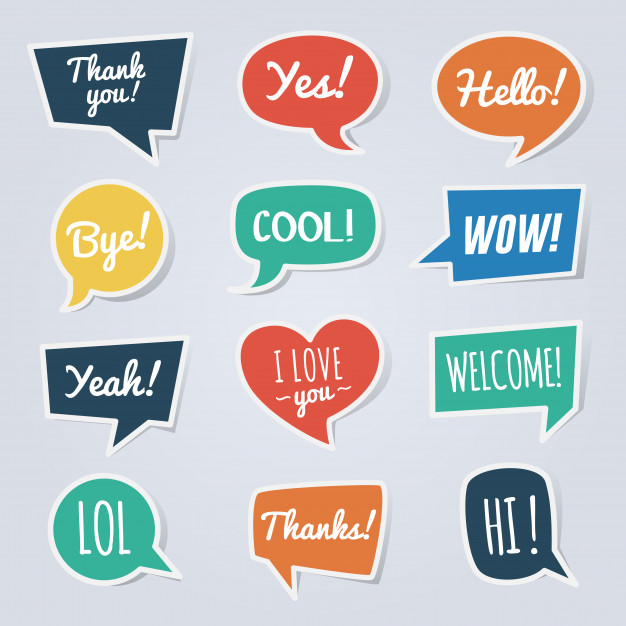
I would like to start today’s article with a simple question: Is it just me who thinks that our smartphones rule our daily lives? When you think about it carefully, we don’t even need to use a computer anymore. With smartphones and their applications, as well as the most popular social media platforms, we can accomplish so much instantly. We can chat with friends all over the world, and because we live in a time where we want to do many things simultaneously and quickly, we often shorten words to save time.

I’d like to share some examples in the five languages I know to illustrate how amusing, yet at times stressful and sad, it can be for language enthusiasts to see grammar being neglected. But well! Win some, lose some…

For example, the proper word for “message” is abbreviated as “msg.” So, “Can I send u a msg?” should be “Can I send you a message?

Italian:

Text: Ciao! Cm stai? T posso kiam dopo? C ved fra 2 gg. Tvttb.

Full Sentence: Ciao! Come stai? Ti posso chiamare dopo? Ci vediamo fra due giorni. Ti voglio tanto tanto bene.

(Hi! How are you? Can I call you later? See you in two days. I love you so so much.)

Text: Xo Xké fai cs?

Full Sentence: Però perché fai così?

(But why do you act like this?)

Spanish:

Text: Wenas! bno ntp! ns vms dsps!

Full Sentence: Buenas tardes! Bueno no te preocupes! Nos vemos después!

(Good afternoon! Well, don’t worry! See you later!)

Text: Tkm, pr q sepas! xoxo

Full Sentence: Te quiero mucho, para que sepas! Besos y abrazos.

(I love you so much, just to let you know! Hugs and kisses)

English:

Text: Hi! How r u? TGIF!!! LOL

Full Sentence: Hi! How are you? Thank God it’s Friday!!! Laughing out loud

Text: TYVM 4 ur help! ILU!

Full Sentence: Thank you very much for your help! I love you!

Portuguese:

Text: Pdc, acho q vc está certo!

Full Sentence: Pode crer, acho que você está certo!

(You can believe it, I think you are right!)

Text: Te digo a vdd: tenho sdds d vc!!!

Full Sentence: Te digo a verdade: tenho saudades de você!!!

(I tell you the truth: I miss you!!!)

Norwegian:

Text: Ifht hva du sier, r d ikke mulig å gjøre d pga stedet.

Full Sentence: i forhold til hva du sier, er det ikke mulig å gjøre det på grunn av stedet.

(According to what you say, it is not possible to do that because of the place.)

Text: R de 3 elns? Også hvor r de?

Full Sentence: Er de tre eller noe sånt? Også hvor er de?

(Are they three or something like that? And also, where are they?)

As you can see, with this method, we create new vocabulary every day. However, it may not be quite understandable for everyone. Sometimes, I think it is better to value a single moment and take a minute to write a complete message.

Isn’t it better to read “I LOVE YOU” instead of “I LUV U”? Think about it!

bulle-dialogue-papier-messages-courts_7547-333 (1)

Source

Which size do you drink?

Hello there dear readers!

Today, I want to share a curiosity that has been on my mind lately.

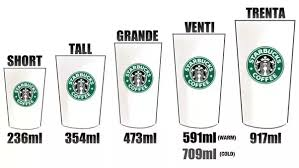
A couple of days ago, I visited a Starbucks here in Oslo. When ordering a Frappuccino, I noticed something peculiar about the size names: Short, Tall, Grande, Venti, Trenta. As we all know, sizes are typically ordered according to their names. I chose the one that suited me best and thought that was the end of it. But what really caught my attention was the mix of languages in the size names.

We have a combination of English and Italian. My question is: wouldn’t it have been better to stick to one language from the beginning? Why call it a Tall size when it’s just slightly bigger than Short? And what about Venti and Trenta?

This left me speechless. Being the curious person I am, I had to investigate. I discovered that Venti means twenty in Italian, which corresponds to twenty ounces, and Trenta means thirty, corresponding to thirty ounces of Frappuccino in a big cup.

Even with these explanations, I still find it odd to mix languages in this way. Considering Starbucks is an international brand, they could have used a more logical approach in naming sizes.

Why not use one language consistently, such as:

Short, medium, tall, big, and super big (English)

Otto, dodici, sedici, venti, trenta (Italian, according to the ounces)

Or even artistic names with some form of logic?

Do you agree with me? It seems being international doesn’t mean using languages without a coherent plan.

I’d love to hear your thoughts on this!

starbucks
Source

What time is it?

The Significance of Time in Our Daily Lives

Time” is a small word with immense importance in our everyday lives. Everything revolves around it: every moment and every minute we take is a step toward organizing our daily activities. We often live as if our time is running out, which is somewhat accurate, but sometimes we should slow down and enjoy every moment fully.

We tend to plan our days with some sort of agenda, organizing our routines and scheduling specific appointments or errands. But how do we ask “What time is it?” and respond to this question in Italian, Spanish, English, Portuguese, and Norwegian?

The inspiration for this article came from an experience I had recently. I overheard a Norwegian person abbreviate the proper way of stating the time, and I wondered, “Is that possible?” After considering how he should have said it, I understood why he omitted the full phrase—it takes quite a long time to say it in Norwegian! Before we delve into the Norwegian way of telling time, let’s examine how it is done in other languages.

Italian: In Italian, we ask, “Che ore sono?” (we use the plural form to inquire about the time of day). The response is, “Sono le undici” (it is eleven o’ clock) or “È l’una” (it is one o’ clock). We use the singular form for the number one and the plural form for other numbers. The time can be stated in both digital and analog formats. In this article, I will focus on the analog format because it involves more words in the sentence: “Sono le undici e venti!” (it is twenty past eleven) or “Sono le tre meno un quarto!” (it is a quarter to three). “E” is “past“/right side of the clock and “meno” is “to“/left side of the clock.

Spanish: In Spanish, the question is, “¿Qué hora es?” or “¿Qué horas son?“—both singular and plural forms are used. The answer is always in the plural form, except for one o’clock, which is singular, just like in Italian. “Son las quince y veinticinco” (it is twenty-five past three PM) or “Son las cuatro menos cinco” (it is five to four). On the right side of the clock, they use “y” (and), and on the left side, they use “menos” (to).

English: In English, we ask, “What time is it?” and respond with, “It is twelve o’ clock” or “It is ten to ten!” The singular form is used here. When telling time in English, remember that “past” is used for the right side of the clock (e.g., “it is a quarter past three“), while “to” is used for the left side (e.g., “it is twenty to four“).

Portuguese: Portuguese follows the same pattern as Spanish. They ask, “Que hora é?” or “Que horas são?” and answer with, “São as cinco para onze” or “É a uma e cinco“. “Para” is used to mean “to” (left side of the clock), and “e” is used for “past” (right side of the clock).

Norwegian: Finally, let’s analyze the Norwegian way, which led me to write this article. They ask, “Hva er klokken?” The answer can be complex. For the first quarter on the right side of the clock, they say, “Det er fem tjue” (it is five twenty). For the last quarter, they say, “Det er kvart på fire” (it is a quarter to four). The challenge, particularly for immigrants, comes with phrases like “Det er ti/fem på halv ett” which translates literally to “It is ten/five minutes to the half-hour to one” (meaning “it’s twelve twenty/twenty-five”). For the left side of the clock, they say, “Det er fem/ti over halv tre”, meaning “it is five/ten minutes past the half-hour to three” (i.e., “twenty/twenty-five minutes to three“).

Considering this explanation, I recall the phrase I heard: “Er det ti over?” (He asked, “Is it twenty to…?“)—a significant abbreviation! He should have said, “Er klokken ti over halv elleve?” (Is it twenty to eleven?).

I often wonder why people complicate their lives. What is complicated and “strange” for some might be simple and easy for others. It just takes time to memorize how certain things work.

And I appreciate that!

cartoon_face_large_clock-r32cf18472ea843f69edc3b3bbc8e267f_fup13_8byvr_307

Source