PAPARAZZI

Hello everyone!

One year has passed since Covid-19 and it is still ruling over our lives like day one. Allow me to say that we all have reached a point where we no longer know what we want and live our lives blindly in the hope to figure something out eventually…

I know it has been a while since my last post, but here I am with this new content that got inspired from a random evening with friends and our conversation about “paparazzi phenomenon.”

The word “paparazzi” reminded me of “papera” (duck in Italian) said in a derogatory way and due to its annoying and repetitive sound, I could relate it to the clicks of the cameras. I shared this thought with my friends who went and look for the etymology online. Mr. Google quickly revealed that the word comes from the epic Italian film, Fellini’s “La Dolce Vita,” and its photographer character, whose name is Paparazzo.

My curiosity did not stop there. I continued to look into it and found out that this word could come from “paparazze“- giant clams sighted on the coast of Croatia in the Adriatic Sea and according to an online article “they bring the snap of the shells closer to that of the camera shutter.” How funny!

Another theory presented by Fellini’s wife Giulietta Masina suggests that Paparazzi hails from Italian word pappataci (mosquitos) to indicate an annoying, blood-sucking sand-fly.

As you can see there’s not an official theory that confirms the origin of this word, however, I do believe that it came from the name of a character in Fellini’s film La Dolce Vita released in 1960s.

I love learning new things, so if you know any other theory that you wish to share, by all means, go ahead. You know what they say: develop a passion to learning and you’ll never stop to grow.

 I wish you all a nice week, stay safe and let’s stay connected 😊

Source

ITALIAN AS A SECOND/THIRD LANGUAGE

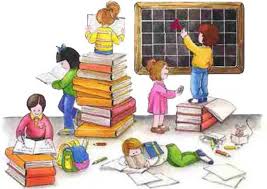
Today, I am going to comment on a very interesting article I came across that discusses how children learn Italian as a second or third language.

Allow me to elaborate further: here in Oslo, there is an Italian association where teachers and academic professionals teach Italian to children. These children either have Italian parents or are of half Italian and half Norwegian origin. It is fascinating to observe how these children learn a second or third language in addition to their native Norwegian.

While some of these children can accelerate their learning at home with the support of their Italian parents, others may need to put in a bit more effort due to their practice being limited to a classroom environment. However, regardless of their family background, it is said that children find it easier to learn a new language because they do not have as much information in their brains as adults. This means they are able to absorb and memorize new information more quickly.

Some of you may be wondering why I have selected this particular topic today. Well, it is because I have been hired by this Italian Association to work as a teacher for the 3rd, 4th, and 5th grades. Yippee!

What excites me the most about this role is the idea of becoming part of a system where I can witness these children’s progress while exploring new ways to support them throughout this journey. It will also be interesting to see how they use their imagination and creativity in a non-native language. I believe that people, particularly children, can learn faster while having a bit of fun. Therefore, I will be experimenting with game-like tasks to support their learning. In addition, I am planning to let them watch cartoons, read fairy tales to them, do some origami, etc. For the primary teachers out there, any other suggestions?

My first aim will be to understand how much Italian they know so far in order to determine the best class for them and the most effective way to teach them this beautiful language. This is a new and exciting challenge for me, as it is my first time teaching Italian as a second or third language to children. Currently, the lessons will be held online, but I am eager to teach in person soon, as I believe it is easier to learn a language face-to-face rather than through a computer.

Let’s see how it goes, wish me good luck!

And you, do you have any children who are learning a second or third language?

Feel free to share your insights and experiences.

Source

LA BELLA MA SBAGLIATA ITALIA

Dear Readers,

After some delightful and relaxing holidays, I am back! How are you all? I can say that I am doing well, back to study and work… I could use a holiday after the holidays, hehe!

Now, let’s focus on the topic I would like to discuss today: the frequent errors we encounter on Italian menus in Italian restaurants around the world. There are so many! I believe that the presentation of a menu and culinary culture are crucial when you sit at the table of a restaurant representing your country.

The first thought that comes to mind when I read these mistakes is: the author is not Italian. However, this is not always the case, unfortunately. Even Italians themselves sometimes make errors when writing in their language.

But what are the mistakes commonly made by those who own Italian restaurants?

Orthographic and grammatical mistakes.

How often do we read: “Spagheti, Spagetti, Veggetariana, Capriciosa, Coze,” etc., when it should be: “Spaghetti, Vegetariana, Capricciosa, Cozze,” etc.?

Or how frequently do we come across: “Buoni sapori ce puoi assagiare sul nostro tavola,” which should be: “Buoni sapori che puoi assaggiare sulla nostra tavola!” or “I nostri clienti sono benvenuto,” when it should be “benvenuti,” the plural form?

I don’t know about you, but I go crazy every time I encounter such experiences, which unfortunately happens quite often!

However, let’s hope that now, with Google at our fingertips, these errors can be checked before being written… hehe!

For those who have been following my blog from the beginning, you already know how curious and particular I become when it comes to “language”! Mistakes should not be made, especially when they appear on a menu that hundreds of people can see!

Anyway, let’s try to stay positive and hope for fewer experiences like these in the future!

Have a wonderful day and a pleasant end of summer!

I miss being a tourist…

Greetings Everyone,

What a time we are living in! First and foremost, I hope that all of you are safe and well.

The topic of this article revolves around one of my greatest passions: traveling.

I truly and deeply love to travel! Believe me, I have had the opportunity to visit many different countries, and I would love to explore even more. The world is vast and filled with incredible sights… but who can possibly see it all?

But what type of tourism do I engage in? And what about others? What purpose does tourism serve?

I recently read an article about tourism that classified three different types of tourism: artistic tourism (museums, buildings, art galleries, religious temples, skyscrapers, monuments, etc.); event tourism (conferences, meetings, festivals, concerts, etc.); and nightlife tourism (parties, parties, parties…hehehe). To these, I would like to add “self-discovery tourism” or journeys that help one find themselves. Although, I believe that we do not need to seek external experiences to fulfill our souls, as fulfillment is already within us (a bit of philosophy here!). You can feel the same wherever you go unless you work on your inner self. Thus, travel is not always necessary.

Personally, I engage in a mix of the first three types of tourism. I think being a tourist is akin to being a student in a classroom: you learn and observe the daily life of a place; you taste wonderful foods; you experience things that may be unfamiliar in your own country, like different music or shows; and you learn about new cultures and their traditions. Traveling enriches your soul and makes you feel free to feel, think, see, do, and even buy. What a discovery, right? Haha. I know many of you share my thoughts on traveling, but I write this because I miss buying a flight ticket and dreaming about my next adventure. When I finally have the chance to travel again, believe me, I will savor every moment. After this stressful period and the constant fear for ourselves and our families, we all deserve to go back to where we belong or simply hug each other tightly until we find it hard to breathe! How amazing would that feel?

It is true that we appreciate or miss something much more once it is no longer available, rather than taking it for granted. This situation, caused by Covid-19, has forced us to change our habits and lifestyles: something as simple as a hug or a handshake may have held little importance before because it was taken for granted… but now? Now that we can no longer do these things, how does it feel? Bad, right?

For those who love tourism, I affirm that tourism is beneficial for everyone, not just for consumerism, which benefits society, but for enriching our knowledge, minds, and souls. You can meet people, compare your story to theirs, learn tips to improve your lifestyle or diet, visit new places, and so on. There is an infinite number of benefits we can gain from traveling. The most important thing is to appreciate our own country or home after visiting a place we may not have liked.

So, my friends, I truly hope that this lockdown will end soon and we can return to our routines, traveling once again to discover more of this wonderful world! I know it will take some time, but never lose hope!

What are your thoughts on this?

viaggiare
Source

What is difficult?

Hello Everyone,

For those of you who have been following my blog since the beginning, you already know that I constantly question myself about the things I do. Learning a language is not an easy task; it requires dedication and cannot be approached with half-heartedness. In previous articles, I have shared simple tricks that I have used over the years to study different languages.

In today’s article, I want to share with you the challenging aspects of each language I have learned.

Aside from Italian, I will start with English. English was the first language I began to learn, and let me tell you, even after many years, I still have a lot to learn, especially regarding the appropriate context for different words. I remind myself that this is normal, particularly because Norway, where I live, is not an English-speaking country. Additionally, I do not use all the contexts, and I do not speak English as often as I should, although thankfully, we can always watch movies in their original versions.

So, what can I do to improve? I am currently reading an English book, which I believe is a good exercise to refresh my memory and learn new words. Given that we are in the Academy Awards season, I am watching all the nominated movies in their original versions, which are far superior to dubbed ones.

When I started university, I began learning Spanish and Portuguese. These languages were not too difficult to learn, but… there is always a “but.” I struggled with correctly placing accents on words and constructing hypothetical sentences in Spanish. Living in Spain for seven years certainly helped me improve my Spanish to an almost native level. As for Portuguese, the most challenging aspect was learning the nasal sounds and correct pronunciation, particularly in Brazilian Portuguese.

However, with these three languages, including my native Italian, it can be hard not to confuse words, especially false friends, as they are similar in all three languages but have different meanings. This can be quite confusing! Fortunately, I have the opportunity to practice speaking these languages with the Spanish, Portuguese, and Italian people I know here, allowing me to learn through trial and error.

The last language I tackled was Norwegian, which I had to learn because my life circumstances brought me to this beautiful country: Norway! Norwegian is similar to English, and like English, I find it challenging to know which words correspond to each context and use them correctly. Another difficulty is learning the various accents and dialects spoken here. It is challenging but also fascinating. Living here, working with Norwegians, watching Norwegian TV, and listening to the radio help me continually improve my language skills.

At this point, I wonder: Am I crazy? No, I just have a lot of information in my head. As I try to organize my brain into five compartments, one for each language, it takes time to put everything in its place. This is a bit crazy, hehehe!

Good luck to me!

Source