We don’t speak Italian!

The Evolution of Modern Italian: An International Influence

It is evident that the Italian we speak today has become quite international, primarily due to our habit of incorporating numerous foreign words into our daily conversations. As a result, it often doesn’t sound like a purely national language anymore. We adopt many loanwords from different cultures, not only because they are concise and help us communicate more quickly, but also because they make us appear “cool.” By “cool,” I mean sophisticated in our linguistic abilities, and our globalized society requires us to demonstrate our open-mindedness.

We frequently mix different languages into our own, such as:

Italian: Ci sentiamo questo weekend? Così ti mando il link del file che mi hai chiesto.

Translation: Shall we call each other this weekend? So I can send you the link of the file you asked me.

Italian: Ho bisogno di una babysitter.

Translation: I need a babysitter.

Italian: Dobbiamo trovare una bella location questo weekend per fare delle foto.

Translation: We have to find a nice location this weekend to take some pictures.

In these examples, approximately 30-50% of the sentences are in English, even though we are speaking Italian. The amusing part is that each of these words has a proper Italian translation, which we rarely use:

Weekend: fine settimana

Link: collegamento

File: cartella

Babysitter: tata

Location: posto, luogo

As you can see, we have numerous opportunities to elevate our language by using these Italian terms in our everyday speech. However, we often prefer the foreign words, possibly because we have become somewhat Americanized!

We might consider following the example of Spanish speakers, who translate almost everything from English to Spanish. They do this out of nationalism and a strong desire to preserve and promote their national language.

What are your thoughts on this? Do you mix different languages in your speech as well?

english-phrases-1
Source

What am I?

Are You Curious? Do You Want to Train Your Brain?

What do you think about riddles? A riddle is an excellent exercise for our brains. It is quite useful for enhancing our intelligence, attention, and speed in understanding what the riddle is talking about.

As the Cambridge Dictionary explains, a riddle is a type of question that describes something in a difficult and confusing way and has a clever or funny answer, often asked as a game; something that is confusing or a problem that is difficult to solve. Please check: Cambridge Dictionary – Riddle

Here are some riddles in the five languages I speak. Let’s see who can guess them:

Italiano- Riddle: La mia vita può durare qualche ora, quello che produco mi divora. Sottile sono veloce, grossa sono lenta e il vento molto mi spaventa. Chi sono?

Español- Riddle: Lleva años en el mar y aún no sabe nadar.

English- Riddle: What can travel around the world while staying in a corner?

Português- Riddle: Somos muitos irmãozinhos em uma só casa vivemos, se nos coçam a cabeça, num instante morremos.

Norsk- Riddle: Hvem er det som er sønn av mine foreldre, men likevel ikke min bror?

Isn’t this cool? Let’s try to guess them!

Please write the answers if you know them!

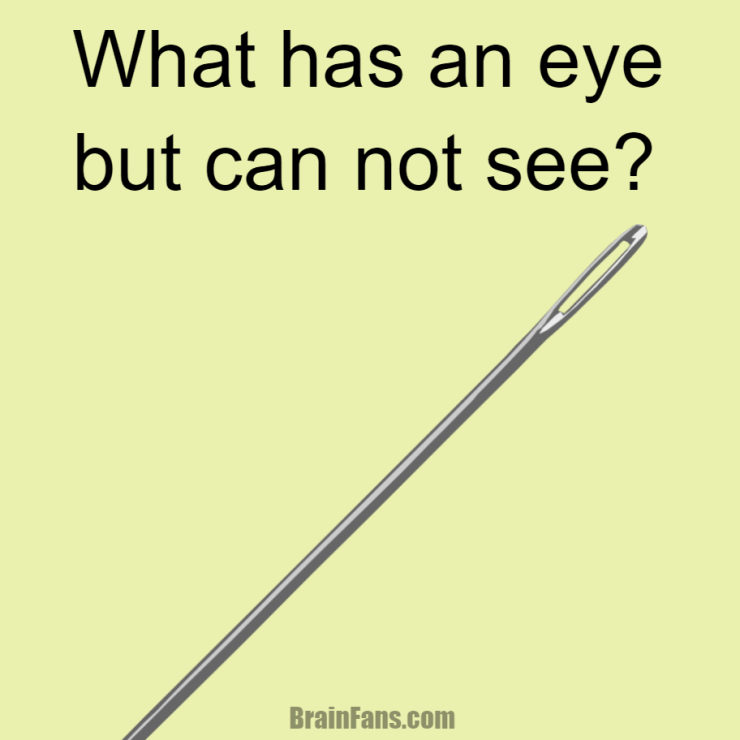
brain-teaser-logic-riddles-what-has-an-eye-but-cannot-see-1658557895593452f40de0b1.80044688
Source

Answers: Italiano- La candela; Español- La arena; English- The stamp; Portugués- Os fósforos; Norsk- Meg selv.

Homonyms…

Have you ever found yourself confused by a word that has multiple meanings depending on the context, especially when you didn’t know which meaning applied? I certainly have. Today, let’s delve into the intriguing world of homonyms: words that have the same spelling and pronunciation but different meanings.

Let’s begin with a Spanish homonym that caught my attention: MONO

According to the Spanish Dictionary RAE (Real Academia Española), “mono” means:

A nice person;

A nice thing;

Monkey;

Overalls; and many more… Please check RAE – Mono

I chose this word because, the other day, I was chatting with a Spanish friend who used “mono” in almost every other sentence. It intrigued me because I wondered how a single word could have so many different meanings.

Similarly, consider the English word COOL

According to the Cambridge Dictionary, “cool” means:

Cold, referring to temperature;

Good, as in agreeing with something;

Calm or weaker;

Fashionable or attractive; and many more. Please check Cambridge Dictionary – Cool

My curiosity extended to Portuguese and Norwegian homonyms as well:

Portuguese:

SALTO:

High heels;

To leap.

BANCO:

Bank;

Bench.

Please check both links: Dicio – Salto; Dicio – Banco

Norwegian:

VÅR:

Our;

Spring.

MÅL:

Goal;

To measure;

Language.

Please check both links: Ordbok – Vår; Ordbok – Mål

I applied this approach to my own language, Italian. Although I don’t speak Italian as frequently, with some research, I found words like:

CAPITALE:

A sum of money;

A city.

FINE:

Aim;

End.

Please check Treccani – Capitale and Treccani – Fine

But how can we avoid confusion? Is practicing and training 24/7 for 365 days a year enough? For me, juggling five languages—well, it might seem like Mission Impossible or Possible! We shall see.

Does this happen to you too?

words
Source

The sounds of LOVE!

Love is an universal language, it is a deep communicative word or act!

Everyone knows the language of love, every detail of it. How many times do we hear or say words of love, watch love movies, listen to romantic songs, read novels?

Everything moves thanks to love, also our job, if we do it with love!

But since I am so curious and everyday I try to learn more and more, I asked some friends, who come from different countries and speak different languages which I don’t speak, to read a part of a love poem for me, just to hear the amazing different sounds of love and of course giving en extra attention to the language they use and how they use it!!!

I asked myself: “How does a Russian, a Polish, a Syrian, a Rumanian speak about love?”

Continue reading “The sounds of LOVE!”